Metal parts used in manufacturing rarely perform well by accident. Around Gastonia, where machine shops, fabricators, manufacturers, and industrial operations depend on durable steel components, the way a metal is heated and cooled can directly affect how it behaves under stress, wear, and repeated use.
Heat treatment applies controlled temperatures and cooling methods to change a metal’s internal structure without substantially changing the shape of the finished part.
Quick answer: Heat treatment works by heating metal to a carefully selected temperature, holding it there for a defined period, and cooling it under controlled conditions. Those steps change the metal’s microstructure, which can alter properties such as hardness, strength, toughness, ductility, wear resistance, and dimensional stability. The exact process depends on the alloy, the part, and the performance required from it.
What Local Manufacturers Should Know
-
Heat treatment changes the internal structure of metal rather than simply heating its exterior.
-
Different heating and cooling cycles can make steel harder, softer, tougher, or easier to machine.
-
Manufacturers throughout Gaston County may use heat-treated parts in machinery, tooling, fabricated assemblies, automotive components, and production equipment.
-
Gastonia’s location along the I-85 industrial corridor makes reliable metal processing especially relevant to manufacturers and suppliers serving the greater Charlotte region.
-
Choosing the appropriate treatment requires understanding the metal grade, part geometry, prior processing, and intended application.
How Does Heat Treatment Change Metal?
Heat treatment changes metal by controlling transformations in its microscopic structure through carefully managed heating, holding, and cooling. In steels, these temperature changes can alter the arrangement of carbon and iron within the material, producing structures with different combinations of hardness, strength, toughness, and ductility.
Metal may look unchanged after treatment, but important changes have occurred internally.
At J F Heat Treating Inc in Gastonia, we work with heat-treatment processes designed to modify the physical and mechanical properties of metal components. Our published services include annealing, normalizing, hardening, tempering, quenching, aging, carburizing, stress relieving, and related metal-processing services.
For manufacturers in Gaston County, this ability to tailor material properties can help match a component more closely to the job it must perform.
What Are the Main Stages of the Heat-Treating Process?
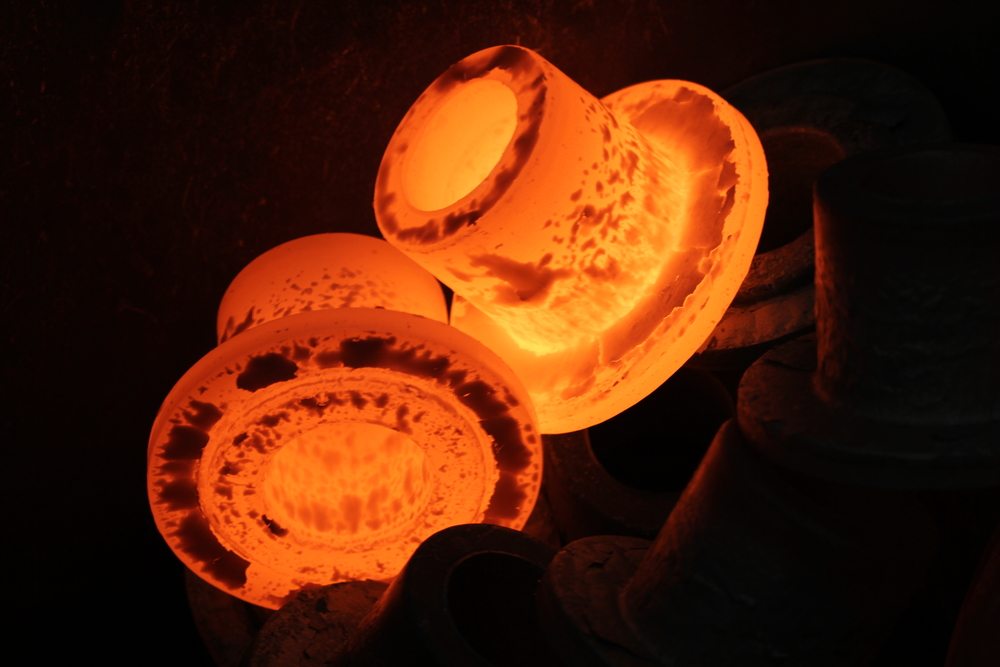
The main stages of heat treatment are controlled heating, soaking at the required temperature, and controlled cooling. Each stage influences the final metallurgical structure, so changing the temperature, holding time, or cooling method can produce noticeably different properties even when the starting material is the same.
During heating, the component is brought toward the temperature range required for the specific treatment.
During soaking, the part remains at temperature long enough for the desired metallurgical changes to occur throughout the required section of material.
During cooling, the rate and method of heat removal influence what microstructure forms next. Depending on the process, cooling may be rapid or gradual.
For Gastonia manufacturers, this controlled sequence matters because industrial parts often need a specific balance of characteristics rather than maximum hardness alone.
Why Does Cooling Rate Matter So Much?
Cooling rate matters because the speed at which heated metal loses temperature strongly influences the microstructure and properties that develop. Rapid cooling can create very hard structures in suitable steels, while slower cooling can produce softer, more ductile structures or help relieve stresses.
Quenching is one example of controlled rapid cooling. In suitable steels, it may be used as part of a hardening process.
Hardness is not always the final goal, however. A very hard steel may also require tempering afterward to reduce brittleness and develop a more practical combination of hardness and toughness.
For machine shops and manufacturers operating between Gastonia and Charlotte, the correct balance depends on how a component will be loaded, worn, machined, or used in service.
What Are the Most Common Heat-Treatment Processes?
Common heat-treatment processes include annealing, normalizing, hardening, quenching and tempering, stress relieving, carburizing, and aging. Each process controls temperature differently because each is intended to create a different material response rather than simply making every metal component harder.
Annealing can soften suitable metals, improve ductility, reduce internal stresses, and make some materials easier to machine or form.
Normalizing uses controlled heating and cooling to refine or improve the uniformity of a steel’s structure.
Hardening is used when greater hardness, strength, or wear resistance is needed from suitable materials.
Quenching and tempering combines hardening with a subsequent tempering step to develop a more useful balance of hardness and toughness.
Stress relieving uses controlled heating and cooling to reduce residual stresses that may remain after processes such as machining or welding.
Carburizing increases carbon near the surface of suitable steel so the exterior can be hardened while maintaining different properties in the core.
These processes are among the services we provide for customers in Gastonia, Gaston County, and the Charlotte area.
Why Does Heat Treatment Matter to Gaston County Manufacturers?
Heat treatment matters to Gaston County manufacturers because metal components often face repeated loads, friction, impact, machining forces, and dimensional requirements that untreated material may not satisfy. Selecting an appropriate treatment can help manufacturers achieve the properties required for a particular part or production process.
The area has a long relationship with manufacturing and industrial development, while its I-85 access connects Gaston County with the broader Charlotte regional economy. Gaston County Economic Development has specifically identified the county as a location for manufacturing, industrial, warehouse, and distribution activity.
That makes metallurgical processing relevant not only to large manufacturers but also to machine shops, fabricators, maintenance operations, tooling businesses, and suppliers in communities such as Belmont, Mount Holly, Dallas, Bessemer City, and Kings Mountain.
What Are Signs a Metal Part May Need Heat Treatment?
A metal component may need heat treatment when its existing material properties do not match the demands of machining, fabrication, wear, loading, or final service. Heat treatment should be specified according to the material and engineering requirements rather than used as a general repair for every metal problem.
Possible reasons to evaluate heat treatment include:
-
A component needs greater surface or overall hardness.
-
Premature wear is occurring in a suitable steel component.
-
A part must retain a tougher interior while developing a harder surface.
-
Machining or welding has introduced residual stress.
-
Material needs greater ductility before additional forming or machining.
-
A hardened component requires tempering to achieve an appropriate hardness-to-toughness balance.
-
Production specifications call for a defined metallurgical treatment.
Visible damage alone does not identify the correct process. Material type, dimensions, prior processing, and the intended end use all matter.
When Should a Gastonia Business Call a Heat-Treating Professional?
A Gastonia business should consult a heat-treating professional when a component requires controlled mechanical properties, a specified metallurgical process, or treatment that cannot be achieved safely and consistently with ordinary shop heating. Professional heat treatment relies on controlled equipment and process conditions rather than visual estimates of metal temperature.
Manufacturers can usually begin by gathering the material specification, part dimensions, required treatment, hardness requirements if specified, and information about the component’s intended use.
DIY heating with a torch or uncontrolled furnace is not equivalent to a specified heat-treatment cycle. Uneven temperatures or inappropriate cooling can create distortion, cracking, unwanted hardness, or inconsistent properties.
What Common Mistakes Can Affect Heat-Treatment Results?
Common heat-treatment mistakes include selecting a process without confirming the material, treating hardness as the only goal, and ignoring part geometry or previous manufacturing steps. A better approach is to evaluate the entire component and its required performance before establishing the treatment method.
Mistake: Assuming harder always means better.
Consequence: Excessive hardness can leave some components too brittle for their intended loading.
Better approach: Match hardness, toughness, and ductility to the application.
Mistake: Ignoring the exact alloy.
Consequence: Different steels respond differently to the same temperature cycle.
Better approach: Confirm the material specification before treatment.
Mistake: Overlooking distortion risk.
Consequence: Heating and cooling can affect dimensional stability.
Better approach: Consider geometry, section thickness, machining history, and required tolerances.
Mistake: Treating heat treatment as the final step automatically.
Consequence: Some parts may require subsequent tempering, cleaning, machining, or other processing.
Better approach: Plan heat treatment as part of the complete manufacturing sequence.
What Can Manufacturers Expect From Professional Heat Treatment?
Manufacturers can expect professional heat treatment to aim for specific material properties through repeatable, controlled heating and cooling processes. The achievable result depends on the alloy, starting condition, component geometry, chosen process, and specification, so the correct treatment begins with understanding what the finished part must do.
Our Gastonia operation publishes capabilities that include several batch-furnace and induction processes, along with services for carburizing, through hardening, stress relieving, quenching and tempering, annealing, shot blasting, and related work.
How Do Heat-Treatment Options Compare?
Heat-treatment options differ primarily in the material properties they are intended to produce. Annealing generally emphasizes softness or ductility, hardening emphasizes strength and wear resistance in suitable steels, tempering modifies hardened steel, and stress relieving focuses on reducing residual stresses rather than maximizing hardness.
The correct choice is therefore application-specific.
A machined component that must resist wear may need a different process from a welded assembly that primarily needs residual stress reduction. Likewise, a tool, shaft, gear, or fabricated component may have different requirements based on loading, surface contact, and dimensional tolerance.
Working from the material and performance specification helps avoid selecting a treatment simply because it is familiar.
Which Areas Do We Serve?
Our heat-treatment services support customers in Gastonia, Gaston County, Charlotte, and surrounding communities in the region. Local manufacturers, machine shops, fabricators, and industrial businesses can work with us when components require professional metallurgical processing.
Our location also places us near manufacturers and suppliers operating around Belmont, Mount Holly, Dallas, Bessemer City, Kings Mountain, and the greater Charlotte industrial corridor.
What Can Happen When Heat-Treatment Requirements Are Ignored?
Ignoring required heat treatment can leave a component with material properties that do not match its intended application. Depending on the part and alloy, the result may include excessive wear, inadequate hardness, unwanted brittleness, residual stress, dimensional instability, or shortened service life.
For a local manufacturer, a poorly specified or skipped treatment can also create production complications if a component later requires rework or replacement.
The better approach is to address metallurgical requirements as part of the manufacturing plan, not after the component has already entered service.
Frequently Asked Questions About Heat Treatment
Does heat treatment melt the metal?
No. Conventional heat treatment generally heats metal below its melting point and controls the heating and cooling cycle to change its internal structure and mechanical properties. The goal is to modify characteristics such as hardness, toughness, ductility, or stress without melting and reshaping the component.
What metals can be heat treated in Gastonia?
The appropriate heat-treatment process depends on the specific metal and alloy. Different grades respond differently to heating and cooling, which is why Gastonia manufacturers should identify the material before selecting a treatment. We specialize in heat-treatment processes for various steel products and also publish capabilities for certain other materials and processes.
Why is steel quenched after heating?
Steel is quenched when rapid cooling is required to develop a particular hardened microstructure in a suitable grade. The steel composition and previous heating conditions determine how it responds. Quenching is frequently followed by tempering because the combination can provide a more practical balance of hardness and toughness.
Is heat treatment useful for machine shops in Gaston County?
Yes. Heat treatment can support Gaston County machine shops when parts require specific hardness, machinability, wear resistance, ductility, or stress-relief characteristics. The best process depends on when treatment occurs within the machining sequence and what mechanical properties the finished component must achieve.
What is the difference between annealing and hardening?
Annealing generally moves suitable metal toward greater softness, ductility, or stress relief, while hardening is intended to increase hardness and strength in appropriate materials. They use different heating and cooling conditions because they aim for different microstructures and performance characteristics.
Can heat treatment reduce stresses after welding?
Yes, stress-relieving heat treatment can be used on appropriate materials to reduce residual stresses created by welding, machining, or other manufacturing processes. For businesses around Gastonia and Charlotte, whether stress relief is appropriate depends on the alloy, component configuration, manufacturing history, and engineering requirements.
Does every hardened steel part need tempering?
Not every application uses the same sequence, but tempering commonly follows hardening because freshly hardened steel can be too brittle for practical service. Tempering reheats the hardened material under controlled conditions to modify its properties and develop the required combination of hardness and toughness.
How do I know which heat treatment my part needs?
Start with the material grade, component dimensions, desired hardness or mechanical properties, manufacturing history, and end-use requirements. If your Gastonia operation is working from an engineering drawing or customer specification, those requirements should also be reviewed before a treatment cycle is selected.
Get the Metal Properties Your Gastonia Operation Requires
Heat treatment is a controlled metallurgical process, not simply a matter of making metal hot. By carefully managing temperature, time, and cooling, the right process can produce the hardness, toughness, ductility, wear resistance, or stress condition required for the job.
For manufacturers and fabricators in Gastonia and the surrounding region, we can help evaluate the appropriate heat-treatment approach for your components.