
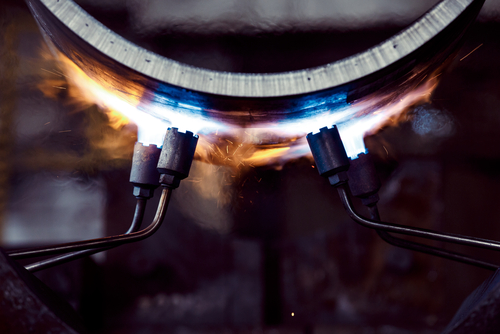
For manufacturers and machine shops in Gastonia, the performance of a metal component can depend on decisions made long before that part reaches a finished assembly. One of the most critical is how accurately temperature is controlled during heat treatment.
Small variations in heating, soaking, cooling, or quenching can influence hardness, strength, dimensional stability, and consistency. In an industrial region connected by I-85 and US 321, dependable heat treatment helps local manufacturers keep parts moving through production without adding avoidable quality problems.
Quick answer: Precise temperature control is essential in metal heat treatment because specific alloys must reach and remain within appropriate temperature ranges to develop the desired material properties. Excessive heat, insufficient heat, uneven furnace conditions, incorrect soak times, or inconsistent cooling can produce unwanted results. Careful process control improves repeatability and helps manufacturers achieve parts that meet their intended performance requirements.
What local manufacturers should know
-
Temperature control affects the metallurgical changes that occur within steel and other heat-treatable metals.
-
Gaston County manufacturers often depend on repeatable downstream processes because inconsistent parts can disrupt machining, assembly, inspection, and production schedules.
-
Temperature uniformity across a load can be just as important as reaching the specified furnace setpoint.
-
Shops throughout the Gastonia and greater Charlotte manufacturing corridor benefit when heat treatment specifications are clearly communicated before processing begins.
-
Accurate records and controlled process parameters can make troubleshooting easier when a component does not perform as expected.
Why Is Precise Temperature Control So Important in Heat Treatment?
Precise temperature control is important because heat treatment relies on controlled thermal cycles to change a metal’s properties without producing unintended metallurgical or dimensional effects. The proper temperature depends on the alloy, part geometry, treatment objective, and process being performed.
A furnace reaching a target number does not automatically mean every section of every component is at the same temperature. Load arrangement, component thickness, furnace characteristics, and heating time can all affect how evenly parts reach the required condition.
For manufacturers in Gastonia, that consistency matters because heat-treated components may continue into machining, fabrication, assembly, or inspection. A problem created during thermal processing can therefore affect several later production steps.
At J F Heat Treating Inc, we recognize that controlled processing is a fundamental part of producing predictable heat-treatment results. From this point forward, our focus is on helping customers understand how temperature, time, material, and cooling conditions work together.
What Happens to Metal When Temperature Is Carefully Controlled?
Carefully controlled temperature allows the intended metallurgical transformation to occur under repeatable conditions, helping the material develop the hardness, strength, toughness, or stability required for its application.
Heat treatment is not simply a matter of making metal hot. Depending on the material and required result, processing can include controlled heating, holding the component at temperature, and cooling it at a specified rate.
Each phase matters.
If material is not heated sufficiently, the desired transformation may be incomplete. Excessive temperatures can also produce undesirable changes. Holding time must allow the component to reach the necessary condition without unnecessarily extending exposure.
That level of repeatability is valuable throughout Gaston County, where metalworking and manufacturing remain part of the area’s industrial base.
Local Manufacturing and the Need for Consistent Processing
Gastonia’s active manufacturing sector makes consistent metal processing especially relevant because local fabricators, machine shops, equipment suppliers, and other industrial businesses depend on reliable components.
The City of Gastonia identifies plastics, automotive, metalworking, and other manufacturing sectors as part of the area’s diverse industrial base. The city’s location along I-85 and US 321 also provides direct connections to the broader Charlotte metropolitan manufacturing and distribution network.
North Carolina Department of Commerce announcements have documented continuing metal fabrication and precision manufacturing investment across Gaston County, including projects in Gastonia, Stanley, and Bessemer City.
Industrial activity also extends into nearby communities such as Belmont, Dallas, Lowell, and McAdenville. For companies working within this regional supply chain, consistent thermal processing can help avoid complications that travel from one production operation to the next.
What Are the Warning Signs of Poor Temperature Control?
Warning signs of inadequate temperature control can include inconsistent hardness, unexpected distortion, variable machining behavior, premature component problems, or differences between parts from the same production batch.
Manufacturers should investigate when they encounter:
-
Hardness measurements that vary more than expected between similar components.
-
Parts that distort enough to interfere with subsequent machining or assembly.
-
Material that behaves differently during machining from one batch to another.
-
Components that do not respond to heat treatment as the material specification suggests they should.
-
Surface or dimensional changes that were not anticipated.
-
Repeated inspection failures after thermal processing.
-
Unexplained differences between parts produced from comparable material and geometry.
These symptoms do not automatically prove that furnace temperature was the cause. Material condition, design, machining history, quenching, and other variables may also contribute. Reviewing the complete process is the better approach.
What Common Factors Affect Heat Treatment Temperature Results?
The most common factors affecting temperature results include furnace uniformity, part size, material composition, load configuration, soak time, instrumentation, and the cooling process that follows heating.
1. Material composition
Different steels and alloys require different thermal cycles. Applying parameters intended for one material to another can produce very different results.
2. Part geometry
A small, thin component normally responds to heat differently from a thick or complicated part. The entire component must be considered rather than relying solely on furnace air temperature.
3. Load configuration
How parts are positioned can influence heating and cooling uniformity. Closely packed loads may respond differently from individually spaced components.
4. Time at temperature
Soaking allows material to reach the required thermal condition. Too little or too much time can affect results depending on the material and process.
5. Cooling conditions
Temperature control does not stop when heating ends. Cooling rate and quenching conditions can be essential parts of the intended metallurgical transformation.
These considerations are relevant whether components originate in a Gastonia machine shop, an industrial facility near I-85, or a manufacturer elsewhere in the greater Charlotte region.
How Can Manufacturers Reduce Heat Treatment Problems?
Manufacturers can reduce heat treatment problems by identifying the material correctly, supplying complete processing requirements, maintaining consistent part preparation, and discussing unusual geometries or critical dimensions before treatment begins.
Good preparation starts before a component enters a furnace.
Material grade should be known rather than assumed. Required hardness or other specifications should be clearly documented. Critical dimensions and areas where distortion would create problems should also be identified when relevant.
For repeating production work, consistency in material source, machining condition, part geometry, and lot organization can make process control easier.
Local Gaston County shops should also avoid treating heat treatment as an isolated final step. Decisions made during design, machining, and material selection may affect how a component responds to thermal processing.
When Should a Professional Heat Treater Be Involved?
A professional heat treater should be involved whenever a component’s required mechanical properties depend on a controlled thermal cycle or when material, hardness, dimensional, or processing requirements must be evaluated before production continues.
Basic visual inspection can identify obvious part condition issues, but heat treatment itself requires appropriate equipment, instrumentation, process knowledge, and controlled conditions.
Manufacturers should seek professional input when specifications are unclear, parts are particularly sensitive to distortion, a new alloy is being introduced, or previous results have been inconsistent.
Early communication can be especially useful for Gastonia-area manufacturers developing new components or changing material specifications.
Common Mistakes That Can Lead to Inconsistent Results
Common heat treatment mistakes usually involve incomplete specifications, incorrect material identification, unrealistic expectations about distortion, or treating temperature as the only process variable.
Mistake: Providing an incomplete material description.
Consequence: The thermal cycle may not align with the material actually being processed.
Better approach: Verify the alloy or material specification before heat treatment.
Mistake: Focusing only on the target furnace temperature.
Consequence: Part temperature, soak time, load configuration, and cooling conditions may be overlooked.
Better approach: Evaluate the complete thermal cycle.
Mistake: Ignoring component geometry.
Consequence: Thick and thin sections may heat and cool differently.
Better approach: Identify unusual shapes, major section changes, and critical dimensions before processing.
Mistake: Waiting until a production problem occurs to discuss requirements.
Consequence: Additional machining, inspection, or production time may already have been invested.
Better approach: Discuss heat-treatment requirements while planning the manufacturing sequence.
A Common Gastonia Manufacturing Scenario
A common local scenario involves a machine shop producing a batch of steel components that will be heat treated before final machining or assembly. The parts may look identical when they leave the machine, but their final performance depends partly on the thermal cycle that follows.
Suppose those components contain thick and thin sections. Heating them too quickly, holding them incorrectly, or cooling them inconsistently could affect their final properties or dimensions.
The better approach is to communicate the material, required result, component geometry, and relevant tolerances before processing. That helps the heat-treatment process become an integrated part of production rather than simply another stop between machining and delivery.
What Results Should Manufacturers Expect From Controlled Heat Treatment?
Controlled heat treatment should provide repeatable processing toward the specified material properties while recognizing that results depend on alloy, geometry, previous material condition, process selection, and applicable tolerances.
No responsible process evaluation should assume that every metal or component will react identically.
For Gaston County manufacturers, realistic expectations begin with a clearly defined specification. A heat treater can then evaluate the thermal-processing requirements and discuss considerations that could affect the component.
That communication is particularly valuable for repeat production, where consistency between batches can be as important as the result of an individual part.
Comparing Controlled Professional Processing With Informal Heating
Professional heat treatment differs from informal heating because the process involves defined temperatures, times, equipment, and cooling conditions rather than simply applying heat until a component appears sufficiently hot.
Shop torches and uncontrolled heating may be useful for certain fabrication tasks, but they are not substitutes for controlled thermal processing when specific metallurgical properties are required.
For industrial components moving through Gastonia’s manufacturing supply chain, professional heat treatment provides a structured process that can be matched to material and performance requirements.
What Does Precise Temperature Control Mean for Gastonia-Area Manufacturers?
For Gastonia-area manufacturers, precise temperature control means reducing unnecessary variability at one of the most consequential stages in metal processing. Better thermal control supports predictable material behavior and can help downstream machining, inspection, and assembly proceed with fewer surprises.
Our central Gaston County location also places us within an active industrial region that includes Bessemer City, Dallas, Lowell, Belmont, Stanley, and connections throughout the Charlotte metro area.
What Can Happen When Heat Treatment Problems Are Ignored?
Ignoring heat treatment inconsistencies can allow problems to move farther into production, increasing the amount of machining, inspection, assembly, and troubleshooting associated with affected parts.
A component that does not achieve its intended properties may not reveal the problem immediately. In some cases, concerns arise during subsequent machining or inspection.
For area manufacturers operating on production schedules, identifying thermal-processing concerns earlier can help limit avoidable disruptions.
Frequently Asked Questions
Why is temperature accuracy important during heat treatment in Gastonia?
Temperature accuracy matters because metal must experience the appropriate thermal cycle to develop the intended properties. Gastonia manufacturers working with machined or fabricated components need consistent processing because heat-treatment variation can influence later machining, inspection, and assembly operations.
Can overheating damage a metal component?
Yes, excessive temperature can produce unwanted metallurgical or dimensional effects depending on the alloy and process. The correct limits vary by material, which is why heat-treatment parameters should be based on known specifications rather than visual appearance or general assumptions.
Is furnace temperature the same as part temperature?
Not necessarily, because a furnace atmosphere can reach its setpoint before every part or every section of a large component reaches the same thermal condition. Part thickness, geometry, load size, furnace characteristics, and soak time can all influence actual component temperature.
Why does soak time matter?
Soak time matters because components need sufficient time under controlled conditions for the intended thermal process to occur throughout the relevant material section. Required time depends on the alloy, component dimensions, furnace conditions, and heat-treatment method.
Do Gaston County machine shops need to provide the material grade?
Yes, providing an accurate material grade is strongly advisable because different alloys can require substantially different heat-treatment temperatures and cooling methods. Clear material identification helps establish appropriate processing requirements and reduces the risk created by assumptions.
Can heat treatment cause dimensional changes?
Yes, dimensional changes or distortion can occur during heat treatment because heating, metallurgical transformation, and cooling place stresses on a component. Part geometry, material condition, machining history, thermal cycle, and cooling method can all influence the amount and type of change.
When should a Gastonia manufacturer discuss heat treatment requirements?
Manufacturers should discuss heat treatment requirements as early as practical, especially for new materials, complicated components, critical tolerances, or repeat production. Early coordination can help identify processing considerations before significant machining or other downstream work has been completed.
Does every steel alloy use the same heat treatment temperature?
No, different steel compositions require different processing ranges and thermal cycles. Even steels used for similar applications may respond differently. The material specification and desired final properties should guide the process rather than applying one standard temperature to every component.
Protect the Consistency of Your Metal Components
Reliable metal performance begins with a controlled process. For manufacturers in Gastonia and communities throughout Gaston County, careful temperature management can help make heat treatment a predictable part of the production sequence rather than a source of unwanted variation.
Support More Consistent Production With Controlled Heat Treatment
We help area manufacturers approach heat treatment with attention to material requirements, processing conditions, and the intended final result.