
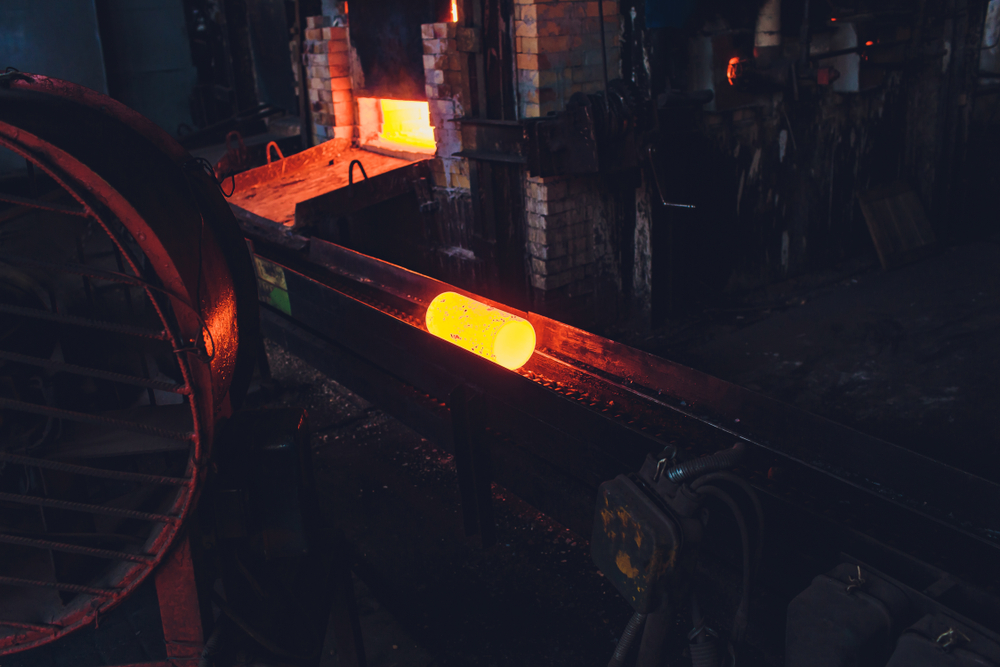
Metal components used in manufacturing often need more than precise machining and forming to perform as intended. For manufacturers in Gastonia and across Gaston County, heat treatment can help produce parts with the hardness, strength, wear resistance, toughness, or dimensional characteristics required for their application.
Heat treatment is not one single process. Different techniques change the properties of metal in different ways, and selecting the right method depends on the alloy, part geometry, manufacturing process, and final performance requirements.
Quick answer: Common heat treatment techniques used in metal manufacturing include annealing, normalizing, hardening, tempering, case hardening, stress relieving, and solution heat treatment or aging. Each process uses controlled heating and cooling to influence the metal’s microstructure and mechanical properties. The appropriate method depends on the material and what the finished component needs to withstand.
What local manufacturers should know
-
Annealing is commonly used when metal needs improved machinability, formability, or reduced hardness.
-
Hardening and tempering are often paired when steel components require both increased hardness and controlled toughness.
-
Manufacturers throughout Gastonia and the greater Charlotte region may use heat treatment at different stages of machining, forming, fabrication, and final production.
-
Stress relieving can help reduce internal stresses created by welding, machining, casting, or other manufacturing processes.
-
The correct heat treatment cycle depends on the alloy, part dimensions, prior processing, and required finished properties.
J F Heat Treating Inc serves manufacturers that need controlled heat treatment as part of their production process. We work with metal components where careful temperature control, heating cycles, and cooling methods play an important role in achieving the specified material condition.
Why Are Heat Treatment Techniques Important in Metal Manufacturing?
Heat treatment techniques are important because they allow manufacturers to modify the mechanical and physical properties of metal without necessarily changing the component’s basic shape. Depending on the process, heat treatment can increase hardness, improve toughness, reduce internal stress, enhance machinability, or prepare material for additional manufacturing operations.
This is particularly relevant in Gastonia, where manufacturing remains an important part of the surrounding industrial economy. Gaston County Economic Development reports nearly 16,000 manufacturing jobs in the county, and its Gastonia Technology Park is specifically developed for advanced manufacturing and technology operations.
For shops producing tooling, machine components, industrial equipment parts, and other metal products, heat treatment can be an important link between initial fabrication and reliable finished performance.
What Is Annealing?
Annealing is a heat treatment technique that heats metal to a controlled temperature and then cools it at a prescribed rate to soften the material, relieve stress, or improve its workability. The exact temperature and cooling procedure vary according to the alloy and the desired final condition.
Annealing may be useful before machining, forming, or additional processing. Material that is too hard can increase tool wear or make certain forming operations more difficult.
Manufacturing operations in Gastonia and nearby communities such as Belmont and Lowell may specify annealing when they need material that is easier to machine or fabricate before later production stages.
Common reasons for annealing include:
-
Reducing hardness
-
Improving ductility
-
Improving machinability
-
Relieving certain internal stresses
-
Preparing material for subsequent processing
Annealing does not provide the same result for every alloy, so the treatment cycle should be selected according to the material specification and manufacturing objective.
What Is Normalizing?
Normalizing is a heat treatment process commonly applied to steel to refine its grain structure and create a more uniform material condition after controlled heating and air cooling. Compared with many annealing processes, normalizing generally involves faster cooling because the component is typically cooled in air.
Normalizing can be useful after forging, casting, or other operations that may leave the steel with an uneven microstructure.
For manufacturers around Gaston County, the process may also be used as an intermediate step before machining or another heat treatment operation.
Normalizing can help:
-
Refine grain structure
-
Produce more uniform mechanical properties
-
Improve machinability in certain steels
-
Prepare material for subsequent hardening
-
Reduce some effects of previous manufacturing processes
Whether normalizing or annealing is more appropriate depends on the alloy and the properties specified for the finished component.
How Does Hardening Work?
Hardening increases the hardness and strength of suitable metals by heating them to a specified temperature and then cooling them rapidly under controlled conditions. In steels, this commonly involves heating into the appropriate transformation range followed by quenching in a selected medium.
The quenching method matters because cooling too slowly may not achieve the required hardness, while overly severe cooling can contribute to distortion or cracking in susceptible components.
Parts produced for equipment and industrial operations along the I-85 and U.S. 321 manufacturing corridors may require hardening when surfaces or entire components must withstand wear, load, or repeated use.
Common considerations include the steel grade, component thickness, geometry, required hardness, and dimensional tolerances.
Why Is Tempering Usually Performed After Hardening?
Tempering is usually performed after hardening because freshly hardened steel can be very hard but also contain undesirable brittleness and internal stresses. Tempering reheats hardened steel to a lower controlled temperature to adjust the balance between hardness, strength, and toughness.
This balance is critical for components that cannot simply be as hard as possible. A tool, shaft, gear, or machine component may also need enough toughness to tolerate shock or repeated loading.
For Gastonia-area manufacturers, specifications may identify both a hardening procedure and a required tempering range so the finished component reaches an appropriate combination of properties rather than hardness alone.
What Is Case Hardening?
Case hardening creates a hard, wear-resistant outer region while allowing the interior of a component to retain different mechanical characteristics. This approach is useful for components that need surface durability without requiring the same hardness throughout the entire cross-section.
Depending on the metal and specification, case-hardening approaches can include carburizing, carbonitriding, and other processes that alter or harden the surface region.
Applications can include gears, pins, shafts, bushings, and other components exposed to surface wear.
Manufacturers serving Gastonia, Charlotte, McAdenville, and surrounding industrial areas may consider case hardening when a component needs both surface resistance and a tougher supporting core.
What Is Stress Relieving?
Stress relieving uses controlled heating and cooling to reduce residual stresses that can develop during welding, machining, casting, forming, or other manufacturing operations. These stresses may remain in a component even when there are no visible signs of a problem.
Removing excessive material during machining, applying concentrated welding heat, or performing heavy fabrication can redistribute internal stresses and contribute to dimensional movement.
Stress relieving may be considered before finish machining when dimensional stability is especially important. It can also be specified after particular fabrication operations.
For precision manufacturing work around Gaston County, reducing residual stress at the correct point in the production sequence can make subsequent machining and dimensional control more manageable.
What Are Solution Heat Treatment and Aging?
Solution heat treatment and aging are processes used with certain alloys to develop desired mechanical properties through controlled heating, cooling, and precipitation within the material. These treatments are commonly associated with precipitation-hardening alloy systems rather than conventional quench-and-temper steel processing.
A typical sequence may involve heating the alloy so selected constituents enter solid solution, cooling it according to the specified process, and then aging the material under controlled conditions.
Because time and temperature requirements vary significantly by alloy, manufacturers should follow the applicable material and engineering specifications rather than treating aging as a universal process.
How Do Manufacturers Choose the Right Heat Treatment Technique?
Manufacturers choose the right heat treatment technique by starting with the alloy specification, required mechanical properties, component geometry, previous manufacturing steps, and final application. Selecting a process based only on a desired hardness number can overlook other important factors such as toughness, distortion, machinability, or dimensional stability.
Before heat treatment, manufacturers may need to evaluate:
-
Material grade and composition
-
Required hardness or strength
-
Part dimensions and geometry
-
Surface versus through-hardening requirements
-
Previous welding, forming, machining, or casting
-
Dimensional tolerances
-
Final service conditions
-
Applicable engineering or customer specifications
For production work in Gastonia, providing accurate material and processing information helps ensure the treatment plan aligns with the intended manufacturing result.
What Warning Signs Suggest a Heat Treatment Process Needs Review?
A heat treatment process may need review when finished components show unexpected hardness, cracking, excessive distortion, inconsistent properties, scale, or dimensional movement. These conditions do not automatically identify one specific cause, but they indicate that material selection, processing history, heating, cooling, or handling may need closer evaluation.
Watch for:
-
Hardness readings outside the specified range
-
Unexpected cracking after treatment
-
Excessive distortion or warping
-
Significant dimensional changes
-
Uneven results between comparable parts
-
Surface conditions inconsistent with requirements
-
Difficulty machining material after treatment
-
Components failing to achieve expected performance
Manufacturers should avoid attempting to correct heat treatment problems without identifying the material and previous processing history first.
What Are Common Heat Treatment Mistakes?
Common heat treatment mistakes include using the wrong process for the alloy, overlooking previous manufacturing steps, and focusing on hardness without considering the complete material specification. Careful planning before components enter the furnace can prevent unnecessary rework and production delays.
Mistake: Treating every steel grade the same.
Consequence: Different alloys respond differently to heating and cooling.
Better approach: Confirm the exact material grade and applicable specification before establishing the treatment cycle.
Mistake: Ignoring part geometry.
Consequence: Thick and thin sections can respond differently during heating and cooling.
Better approach: Consider cross-section, shape, and dimensional tolerances when planning treatment.
Mistake: Looking only at maximum hardness.
Consequence: Excessive hardness may come at the expense of needed toughness.
Better approach: Evaluate all specified mechanical requirements.
Mistake: Leaving heat treatment until the last minute.
Consequence: Production scheduling can become more difficult if additional machining or processing is required afterward.
Better approach: Include heat treatment in the manufacturing sequence from the beginning.
Common Gastonia Manufacturing Scenario
A common Gastonia manufacturing scenario involves a machined steel component that needs greater wear resistance before it can enter service. The manufacturer must identify the steel grade, desired properties, dimensional requirements, and whether the component needs through-hardening, surface treatment, or another process.
After treatment, additional operations may be necessary depending on the specification and dimensional requirements.
Planning the sequence early can help manufacturers coordinate machining, heat treatment, finishing, inspection, and final assembly without treating heat treatment as an isolated step.
When Should a Manufacturer Work With a Heat Treatment Professional?
A manufacturer should work with a heat treatment professional whenever a component requires controlled thermal processing to meet a material, hardness, strength, stress-relief, or performance specification. Professional heat treatment becomes particularly important when temperature control, quenching conditions, process sequencing, or repeatability affect the final part.
Our role is to help manufacturers determine how an appropriate heat treatment process fits into the larger production sequence based on the material and supplied requirements.
How Do Common Heat Treatment Options Compare?
Common heat treatment options differ mainly in whether the goal is softening, hardening, improving toughness, reducing stress, or changing surface properties. The intended performance of the finished component should drive process selection.
| Technique | Typical Purpose |
|---|---|
| Annealing | Soften material and improve workability |
| Normalizing | Refine and improve uniformity of steel structure |
| Hardening | Increase hardness and strength |
| Tempering | Adjust hardness and improve toughness after hardening |
| Case hardening | Create a wear-resistant surface with different core properties |
| Stress relieving | Reduce residual stresses from previous processing |
| Solution treatment and aging | Develop properties in suitable precipitation-hardening alloys |
The correct choice depends on the material specification and component requirements rather than one process being universally better than another.
Where Is Heat Treatment Used Around Gastonia?
Heat treatment supports manufacturers throughout Gastonia and the wider Gaston County industrial area, including businesses connected to machining, metalworking, equipment production, and advanced manufacturing. Nearby industrial communities include Belmont, Lowell, McAdenville, and Bessemer City, with the Charlotte metro area providing an even broader manufacturing network.
Gaston County continues to attract advanced manufacturing investment, including recent industrial expansion projects, reinforcing the region’s role as a manufacturing center west of Charlotte.
What Can Happen When Heat Treatment Is Overlooked?
Overlooking heat treatment requirements can result in components that do not achieve the specified hardness, toughness, wear resistance, machinability, or dimensional stability. It can also create unnecessary production delays if parts must be reprocessed after machining or fabrication is already complete.
The practical cost is often not limited to the treatment itself. Rework may affect machining schedules, inspection, assembly, delivery dates, and material utilization.
FAQ About Heat Treatment in Gastonia, NC
What heat treatment processes are commonly used in Gastonia manufacturing?
Common heat treatment processes include annealing, normalizing, hardening, tempering, stress relieving, case hardening, and specialized solution treatment or aging processes. The process used for a Gastonia manufacturing project should be based on the metal grade, required properties, component geometry, and applicable engineering specifications.
Is annealing the same as hardening?
No, annealing and hardening generally have different objectives. Annealing is commonly used to soften metal, improve ductility, or make certain materials easier to machine, while hardening is intended to increase hardness and strength. Local manufacturers should select the process according to the required final material condition.
Why are steel parts tempered after hardening?
Steel parts are tempered after hardening to modify the material’s combination of hardness and toughness. Hardened steel can contain significant internal stress and may be too brittle for its intended use. Tempering at a controlled temperature adjusts those properties to better match the component specification.
Can heat treatment cause metal parts to distort?
Yes, dimensional changes and distortion can occur during some heat treatment processes because metal expands, contracts, and undergoes structural changes during heating and cooling. Component geometry, alloy, heating rate, quenching method, and previous manufacturing history can all affect the result, making process planning important for precision parts.
Do Gaston County manufacturers need stress relieving after welding?
Stress relieving may be appropriate after welding when residual stresses could affect dimensional stability or subsequent manufacturing operations. It is not automatically required for every welded component. The material, fabrication method, component design, service requirements, and applicable specifications should determine whether stress relief is necessary.
What information should I provide before requesting heat treatment in Gastonia?
Provide the exact material grade, component dimensions, quantity, desired condition or hardness, relevant specifications, and information about previous manufacturing steps whenever possible. Details about machining, welding, forging, casting, or earlier heat treatment can help establish the appropriate processing requirements for your Gastonia production work.
Is case hardening appropriate for every steel part?
No, case hardening is not suitable or necessary for every steel component. It is generally considered when a hard, wear-resistant outer region and different core properties are desirable. Material composition, component design, required case depth, and service conditions determine whether a particular case-hardening process is appropriate.
When should heat treatment be planned during manufacturing?
Heat treatment should be planned early enough that machining, fabrication, finishing, and inspection can be arranged in the correct sequence. For Gastonia manufacturers with tight production tolerances, determining the heat treatment stage before final machining may help account for hardness changes, residual stress, or dimensional movement associated with processing.
Get the Metal Properties Your Gastonia Manufacturing Project Requires
Choosing the right heat treatment technique starts with understanding the metal, the manufacturing sequence, and the required finished properties. At J F Heat Treating Inc, we help area manufacturers incorporate controlled heat treatment into their production requirements.