
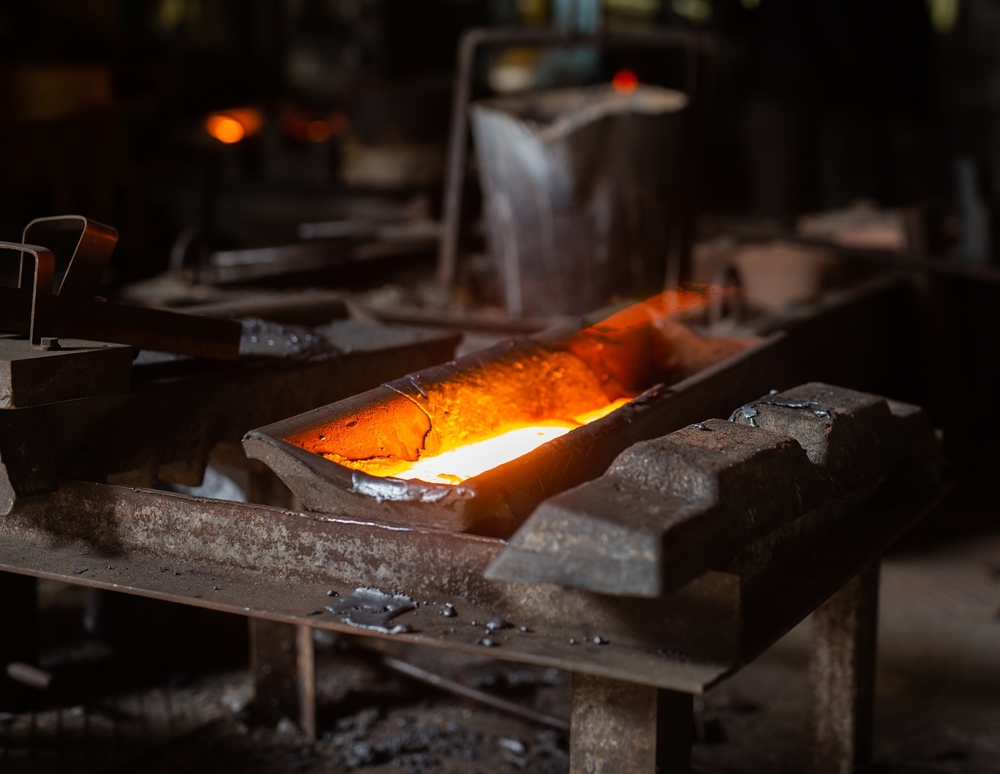
Metal heat treatment has become one of the most essential processes in modern manufacturing and industrial production. From automotive components to aerospace parts, the ability to alter and enhance the physical and mechanical properties of metals through controlled heating and cooling cycles has transformed how industries approach material performance.
Understanding the full scope of what metal heat treatment offers can help engineers, manufacturers, and business owners make smarter decisions about their production processes and material choices.
How Metal Heat Treating Strengthens Industrial Components
One of the most significant advantages of metal heat treatment is its ability to dramatically increase the strength and hardness of metal parts. When metals are subjected to precise heating and controlled cooling, their internal crystalline structure undergoes fundamental changes. These changes can make a component far more resistant to wear, fatigue, and mechanical stress than it would be in its untreated state.
Processes like case hardening, for example, allow manufacturers to create a hard outer surface on a metal part while preserving a softer, more ductile core. This combination is particularly valuable in applications where a part must withstand surface abrasion without becoming brittle throughout its entire structure. Gears, shafts, and bearing surfaces are common examples of components that benefit enormously from this type of metal heat treatment.
Quenching and tempering are two additional techniques that work together to refine the grain structure of steel and other alloys. Quenching rapidly cools a heated metal, locking in a hard microstructure, while tempering follows to reduce brittleness and introduce a measure of toughness. The result is a component that can handle both impact loads and sustained mechanical stress, which is critical in heavy industrial environments.
Improving Metal Ductility and Formability Through Annealing
Not every industrial application demands extreme hardness. In many manufacturing scenarios, the ability to shape, bend, or machine a metal without cracking or tool damage is just as important. This is where annealing, a core branch of metal heat treatment, proves invaluable.
Annealing involves heating a metal to a specific temperature and then cooling it slowly, typically within a controlled furnace environment. This process relieves internal stresses that have built up during prior manufacturing steps, such as rolling, drawing, or welding. By reducing these residual stresses, annealing restores ductility and makes the metal far easier to work with during subsequent fabrication stages.
For industries that rely on precision forming, such as the production of medical devices, electronic housings, or stamped automotive parts, annealing can be the difference between a smooth manufacturing run and a costly batch of rejected components. Metal heat treatment through annealing also improves machinability, reducing tool wear and cutting time, which translates directly into lower production costs and more consistent part quality.
Cold-worked metals, which have been hardened through deformation, are particularly good candidates for annealing. After the annealing cycle is complete, these metals can be further shaped or drawn without cracking, giving manufacturers greater flexibility in their production workflows.
Extending the Service Life of Critical Industrial Parts
Industrial equipment operates under demanding conditions. Heat, friction, corrosive environments, and cyclic loading all take a toll on metal components over time. One of the most compelling reasons to invest in metal heat treatment is the substantial extension of service life it can provide.
When a component is properly heat treated, its resistance to fatigue failure increases considerably. Fatigue failure occurs when repeated stress cycles cause microscopic cracks to propagate through a metal until the part fractures. By refining the grain structure and eliminating internal flaws through heat treatment, manufacturers can significantly delay the onset of fatigue cracking and extend the operational lifespan of critical parts.
Surface hardening treatments, such as nitriding and carburizing, are particularly effective for components exposed to abrasive wear. These processes infuse the surface layer of the metal with nitrogen or carbon, creating an exceptionally hard case that resists scratching and material removal. In high-cycle applications like engine components, cutting tools, and conveyor systems, this extended wear resistance can reduce maintenance intervals and lower the total cost of ownership over the life of the equipment.
Corrosion resistance can also be enhanced through certain metal heat treatment processes. Proper stress relief treatments can reduce the susceptibility of stainless steel and other alloys to stress corrosion cracking, which is a common failure mode in chemical processing and marine environments. When a component lasts longer, the economic and operational benefits compound across the entire production system.
Achieving Dimensional Stability and Precision in Manufactured Parts
Precision is non-negotiable in many industrial sectors. Components used in aerospace, defense, and medical manufacturing must meet extremely tight dimensional tolerances, and any distortion introduced during production can render a part unusable. Metal heat treatment plays a critical role in achieving and maintaining the dimensional stability required for these high-stakes applications.
Stress relieving is a heat treatment process specifically designed to minimize distortion and dimensional change in finished or near-finished parts. After machining or welding, residual stresses are locked into the metal. If these stresses are not removed before final finishing or assembly, the part can warp or shift over time as the stresses gradually release. Stress relieving heats the part to a moderate temperature and holds it there long enough to allow the internal stresses to redistribute evenly, after which the part cools slowly to prevent new stresses from forming.
Stabilization treatments are another specialized form of metal heat treatment used to prepare components for service in environments with extreme temperature fluctuations. By cycling a part through a controlled temperature range before it enters service, manufacturers can ensure that any dimensional changes occur in a controlled setting rather than unexpectedly during operation. This is particularly important for precision instruments, tooling blocks, and structural components in aerospace platforms.
The consistency that metal heat treatment provides across production batches is also worth noting. When heat treatment parameters are carefully controlled and documented, manufacturers can reproduce the same mechanical properties batch after batch, which supports quality assurance programs and regulatory compliance in highly regulated industries.
The Economic and Competitive Advantages of Metal Heat Treatment
Beyond the technical benefits, metal heat treatment offers meaningful economic advantages that make it an attractive investment for industrial manufacturers. The ability to use a less expensive base material and elevate its properties through heat treatment can reduce raw material costs without sacrificing performance. Rather than defaulting to a premium alloy, engineers can often specify a more affordable steel grade and achieve the required hardness, toughness, or wear resistance through a well-designed heat treatment process.
Reduced scrap and rework rates are another economic benefit tied to proper heat treatment integration. When components are heat treated correctly, they are less likely to fail during subsequent manufacturing steps or during quality inspection. Fewer failures mean less wasted material, less machine time spent on rework, and a lower overall cost per part.
From a competitive standpoint, manufacturers who invest in advanced metal heat treatment capabilities can offer customers parts with superior performance characteristics. In markets where product reliability and longevity are key purchasing criteria, the ability to certify that components have been heat treated to precise specifications can serve as a meaningful differentiator. This is especially true in sectors like energy, transportation, and industrial machinery, where downtime caused by component failure carries significant financial consequences.
Conclusion
Metal heat treatment remains one of the most versatile and cost-effective tools available to industrial manufacturers. Whether the goal is greater hardness, improved ductility, longer service life, tighter dimensional tolerances, or reduced production costs, the right heat treatment process can deliver measurable results. As materials science continues to advance and manufacturing demands grow more complex, metal heat treatment will only become more central to the production of reliable, high-performance industrial components.
Need Heat Treatment Services Near You?
Family owned and operated J.F. Heat Treating Inc, is a metal heat treating service company with more than 34 years of experience! Heat treatment is the controlled heating and cooling of metals to alter their physical and mechanical properties without changing the product shape. We specialize in the through hardening and carbonizing of various steel products in a metallurgical lab. It is our privilege to service and work with the manufacturing and fabrication industries to give the best product service available! Our heat treating services include annealing, aging, quenching and tempering to soften, harden, stress relieve, remove contaminants or provide other material characteristics to parts and components. Contact us today to learn more about what we can do for you!