
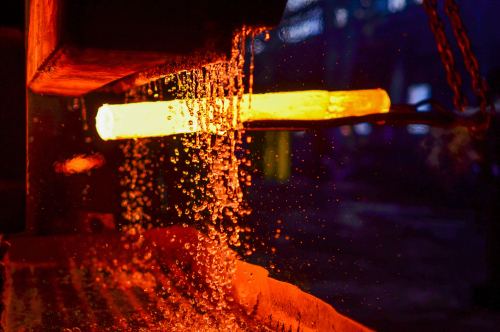
Heat treating is a critical process in modern manufacturing that transforms the properties of metals and alloys through carefully controlled heating and cooling cycles. This ancient technique, which dates back thousands of years, has evolved into a sophisticated science that enables manufacturers to create materials with specific mechanical properties tailored for demanding applications. Whether producing aerospace components, automotive parts, or industrial machinery, heat treating processes form the backbone of quality metal production.
The fundamental principle behind heat treating involves heating materials to specific temperatures and then cooling them at controlled rates. This manipulation of temperature allows manufacturers to alter the crystal structure of metals, resulting in changes to hardness, strength, ductility, and other critical properties. Understanding the various heat treating processes available is essential for engineers and manufacturers who need to select the appropriate technique for their specific applications and performance requirements.
Annealing: Softening and Refining Metal Structure
Annealing represents one of the most widely used heat treating processes in the manufacturing industry. This process involves heating a material to a specific temperature, holding it at that temperature for a predetermined time, and then cooling it slowly back to room temperature. The primary purpose of annealing is to relieve internal stresses within the metal, increase ductility, and refine the grain structure.
During annealing, metals become softer and more workable, making them easier to machine or form into desired shapes. This property makes annealing invaluable for metals that have become hardened and brittle from previous working or cold forming operations. Different types of annealing exist, including full annealing, normalizing, and stress relief annealing, each serving specific purposes in the manufacturing process. Full annealing typically produces the softest possible state, while stress relief annealing removes internal stresses without significantly softening the material. Manufacturers commonly use annealing for materials like steel, aluminum, and copper alloys before subsequent manufacturing operations.
Quenching and Hardening: Achieving Maximum Hardness
Quenching and hardening processes work together to dramatically increase the hardness and strength of metals. During this heat treating process, the material is heated to a critical temperature where the crystal structure becomes unstable. The heated material is then rapidly cooled, or quenched, in a cooling medium such as water, oil, or salt brine. This rapid cooling essentially “freezes” the crystal structure in a very hard state.
The choice of cooling medium significantly affects the final properties of the material. Water provides the most rapid cooling rate, producing maximum hardness but also creating high internal stresses. Oil cools more slowly than water, resulting in slightly less hardness but reduced stress. For extremely precise control, some manufacturers use salt brine or molten salt solutions that allow for intermediate cooling rates. Steel is the primary material that benefits from quenching and hardening, as its carbon content allows for dramatic property changes through this process. However, the extreme hardness achieved through quenching often makes the material brittle, which is why most quenched parts undergo tempering to improve toughness.
Tempering: Balancing Hardness and Toughness
Tempering is a heat treating process that follows quenching to improve the toughness and reduce the brittleness of hardened materials. After quenching produces an extremely hard but brittle material, tempering reheats the part to a lower temperature, typically between 300 and 700 degrees Fahrenheit depending on the desired final properties. This controlled reheating allows some of the internal stresses created during quenching to relieve while maintaining the hardness gained from the quenching process.
The tempering temperature directly controls the final balance between hardness and toughness. Lower tempering temperatures preserve more hardness while slightly improving toughness. Higher tempering temperatures reduce hardness more significantly but provide greater toughness and impact resistance. Manufacturers carefully select tempering temperatures based on the intended application of the component. For example, cutting tools and dies require high hardness and use lower tempering temperatures, while springs and structural components benefit from higher tempering temperatures that provide better toughness and fatigue resistance. This process essentially fine-tunes the properties of quenched steel to match specific service requirements.
Case Hardening: Surface Hardness with Tough Core
Case hardening processes create a hard, wear-resistant outer surface while maintaining a tough, ductile core in the same component. This combination of properties is ideal for parts that must withstand both surface wear and impact loads. Several case hardening techniques exist, including carburizing, nitriding, and case induction hardening, each employing different methods to introduce hardness to the surface while preserving core toughness.
Carburizing involves heating steel in a carbon-rich atmosphere, which causes carbon to diffuse into the surface layers of the metal. The carbon enrichment makes the surface hardenable, and subsequent quenching creates a hard outer case. The depth of the hardened case can be controlled by adjusting the carburizing temperature and time. Nitriding accomplishes similar results by introducing nitrogen into the surface of the steel, often producing a harder case than carburizing and with less distortion during processing. Case induction hardening uses localized induction heating to heat only the surface area to hardening temperatures, then cools rapidly to create a hardened case. These case hardening processes are particularly popular in the automotive and machinery industries where components like gears, crankshafts, and bearing races require exceptional surface durability combined with core toughness.
Stress Relief and Specialized Heat Treating Techniques
Beyond the major heat treating processes, manufacturers employ numerous specialized techniques to address specific property requirements and challenges. Stress relief heat treating removes internal stresses created during manufacturing processes like welding, machining, or forming without significantly altering the primary properties of the material. This process involves heating to relatively low temperatures, holding at temperature briefly, and then cooling slowly. Precipitation hardening, used extensively with aluminum alloys and stainless steels, involves specific heating and cooling cycles that cause elements in solid solution to precipitate as small particles, dramatically increasing strength.
Austempering and martempering represent additional specialized heat treating techniques for steel that provide specific combinations of properties. Austempering quenches steel at a higher temperature than conventional quenching, producing lower internal stresses and improved toughness while maintaining good hardness. Martempering quenches to an intermediate temperature and holds briefly before final cooling, further reducing distortion and cracking risks. Vacuum heat treating processes eliminate oxidation concerns by performing the entire heat cycle in a vacuum or inert atmosphere, producing superior surface properties and allowing for more precise control of the heating process.
Conclusion
Heat treating remains an indispensable process in manufacturing, offering manufacturers the ability to precisely control material properties through controlled thermal cycles. From annealing that softens metals for further processing to case hardening that creates durable surfaces on tough cores, these processes enable the production of components with properties perfectly matched to their intended applications. As manufacturing demands continue to evolve, heat treating technology continues advancing, providing engineers with increasingly sophisticated tools to optimize material performance and reliability.
Need Heat Treatment Services Near You?
Family owned and operated J.F. Heat Treating Inc, is a metal heat treating service company with more than 34 years of experience! Heat treatment is the controlled heating and cooling of metals to alter their physical and mechanical properties without changing the product shape. We specialize in the through hardening and carbonizing of various steel products in a metallurgical lab. It is our privilege to service and work with the manufacturing and fabrication industries to give the best product service available! Our heat treating services include annealing, aging, quenching and tempering to soften, harden, stress relieve, remove contaminants or provide other material characteristics to parts and components. Contact us today to learn more about what we can do for you!