
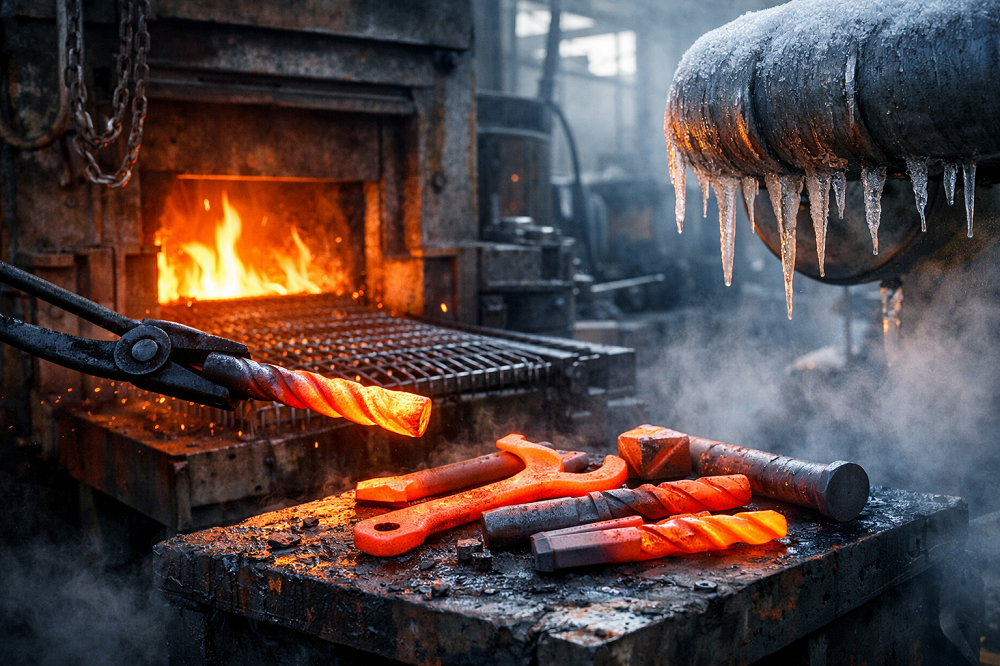
In the manufacturing hubs of Charlotte, NC, winter presents unique challenges that impact production efficiency and equipment durability. As temperatures drop, metal tools and components are subjected to stressors that can shorten their lifespan, hinder performance, and increase maintenance costs. One of the most effective ways to mitigate these seasonal issues is through industrial heat treating. This specialized process plays a vital role in enhancing the resilience and durability of tools used in manufacturing environments, particularly during the colder months.
Industrial heat treating is not a one-size-fits-all solution. It involves precise thermal processing techniques tailored to specific alloys and tool applications. For manufacturers in Charlotte, NC, the process ensures continued productivity, even when harsh weather conditions might otherwise degrade materials. This blog explores how manufacturers in the region leverage heat treating for manufacturing tools to maintain performance and extend tool life throughout the winter season.
The Impact of Cold Weather on Tool Durability
Winter conditions can severely affect the performance and longevity of manufacturing tools. As temperatures decrease, metal becomes more brittle and susceptible to cracking, deformation, and wear. For tools made from steel, the cold can exacerbate issues like thermal contraction and fatigue, particularly in high-stress applications such as stamping, cutting, and forging.
In Charlotte, where temperature swings can be significant, these problems are particularly concerning for manufacturers operating continuous production lines. Unanticipated tool failure leads to downtime, quality defects, and increased maintenance costs. To address these challenges, many manufacturers turn to industrial heat treating to modify the microstructure of metals, enhancing their resistance to mechanical and thermal stress.
Industrial heat treating processes such as annealing, tempering, carburizing, and quenching provide targeted solutions depending on the desired properties of the tool. For instance, a tool that requires high surface hardness and internal toughness may undergo case hardening to build a durable exterior while maintaining core ductility. This dual-strength structure is particularly beneficial in colder environments where impact resistance is essential.
How Heat Treating Improves Tool Performance
At its core, heat treating involves controlled heating and cooling cycles that change the physical and chemical properties of metal. For Charlotte manufacturers, the goal is to produce tools that are more resilient to the seasonal changes in temperature, especially when exposed to fluctuating conditions between heated shop floors and outdoor storage or transport.
One key advantage of heat treating for manufacturing tools is the ability to tailor hardness and ductility. For example, quenching and tempering processes can dramatically improve the wear resistance of cutting tools. This is vital in winter, when lubricants may thicken and create additional friction during machining operations. With increased surface hardness, tools experience less abrasive wear, reducing the frequency of re-sharpening or replacement.
Another critical benefit is the improvement of fatigue strength. Winter conditions can lead to thermal shock when tools are rapidly heated or cooled. Heat treated tools are better equipped to handle these transitions without developing microcracks or stress fractures. By reinforcing the internal grain structure, manufacturers can rely on their equipment to function consistently, even in harsh winter environments.
Charlotte-based facilities that serve aerospace, automotive, and heavy equipment industries particularly value these enhancements. Their operations often demand precision tools that can operate for extended periods without degradation. Industrial heat treating ensures those tools retain dimensional stability and maintain sharp cutting edges, even under demanding winter workloads.
Custom Heat Treating Solutions for Charlotte Industries
Charlotte’s manufacturing sector is diverse, encompassing everything from precision machining shops to large-scale fabrication plants. Each of these industries requires a different approach to tool treatment. Local heat treating providers in Charlotte, NC, have developed tailored services to meet these varied needs, offering specialized treatment cycles based on tool geometry, material composition, and intended use.
For example, tool steels such as D2 or M2 are commonly used for their high wear resistance. These alloys respond well to vacuum heat treating, which eliminates oxidation and scale formation during processing. This is especially important in clean room environments or applications where surface finish is critical.
In other scenarios, cryogenic treatments are employed after traditional heat treating processes to improve wear resistance further. By exposing tools to extremely low temperatures, residual austenite is transformed into martensite, increasing hardness and stability. This technique is often utilized in Charlotte’s high-performance manufacturing sectors where tool longevity directly impacts production efficiency.
Local heat treating facilities also support rapid turnaround times, which is crucial during winter months when unforeseen tool failures can disrupt operations. These service providers often offer consultation and failure analysis to help manufacturers select the optimal treatment methods for their specific challenges.
Preventing Winter Downtime Through Proactive Maintenance
One of the most valuable strategies employed by Charlotte manufacturers is the integration of industrial heat treating into proactive maintenance schedules. Rather than waiting for tools to fail under winter stress, companies invest in heat treating at regular intervals to restore performance and prevent costly breakdowns.
This proactive approach minimizes downtime and ensures production lines remain operational throughout the winter. It also supports better inventory management, as tools last longer and need to be replaced less frequently. In highly automated manufacturing environments, where uptime is critical, these small efficiencies can translate into substantial cost savings over time.
Furthermore, heat treated tools require less frequent calibration and adjustment. This means equipment can run longer between scheduled maintenance checks, allowing technicians to focus on other critical systems during winter prep. As manufacturers face heightened demands in Q4 and Q1 due to seasonal cycles, reducing tool-related disruptions becomes even more essential.
Charlotte’s emphasis on lean manufacturing principles reinforces this approach. By aligning maintenance strategies with production goals, manufacturers can maintain high throughput while minimizing waste and inefficiency. Heat treating becomes a strategic investment that supports both quality assurance and operational stability.
The Future of Heat Treating in Charlotte’s Manufacturing Landscape
As Charlotte continues to grow as a hub for advanced manufacturing, the demand for sophisticated heat treating technologies is expected to rise. Innovations in induction heat treating, laser surface hardening, and automation are making it easier for manufacturers to customize tool treatments without increasing lead times or costs.
In addition, sustainability concerns are influencing the adoption of greener heat treating processes. Charlotte-based providers are exploring energy-efficient furnaces, reduced emissions, and recyclable quenching media to align with environmental goals. These developments make industrial heat treating not only a performance-enhancing process but also a responsible business practice.
Collaboration between local universities, research centers, and industry leaders is also contributing to the evolution of heat treating methods. Advanced simulation tools allow for precise modeling of thermal cycles, reducing trial-and-error and improving first-pass success rates. Charlotte manufacturers that invest in these technologies position themselves at the forefront of innovation while reinforcing their ability to compete nationally and globally.
Conclusion
Industrial heat treating is an essential process for manufacturers in Charlotte, NC, particularly during the demanding winter months. It enhances the durability, performance, and reliability of tools that are critical to maintaining productivity across a range of industries. By addressing the challenges posed by cold weather through tailored thermal treatments, manufacturers can reduce downtime, extend tool life, and improve operational efficiency.
As the manufacturing landscape evolves, Charlotte businesses that leverage advanced heat treating for manufacturing tools will be better equipped to handle seasonal fluctuations and remain competitive. From custom alloy treatments to proactive maintenance strategies, heat treating provides the foundation for long-term success in an environment where every hour of uptime counts.
Need Heat Treatment Services Near You?
Family owned and operated J.F. Heat Treating Inc, is a metal heat treating service company with more than 34 years of experience! Heat treatment is the controlled heating and cooling of metals to alter their physical and mechanical properties without changing the product shape. We specialize in the through hardening and carbonizing of various steel products in a metallurgical lab. It is our privilege to service and work with the manufacturing and fabrication industries to give the best product service available! Our heat treating services include annealing, aging, quenching and tempering to soften, harden, stress relieve, remove contaminants or provide other material characteristics to parts and components. Contact us today to learn more about what we can do for you!